

Cognitive Dissidence

Have we as a nation once again arrived at the need for personal, “cognitive dissidence,” or has the great American experiment in democracy finally reached its conclusive findings?
First, let’s do a little etymology. A dissident is “a person who expresses strong opposition to official policies, especially those of an authoritarian regime.” My adding the adjective, “cognitive,” is actually a redundancy, simply to emphasize that the opposition is an intentional effort/choice (i.e., knowingly oppositional, not accidentally disobedient; defiant. And, it’s a fun play on the phrase, “cognitive dissonance”😊).
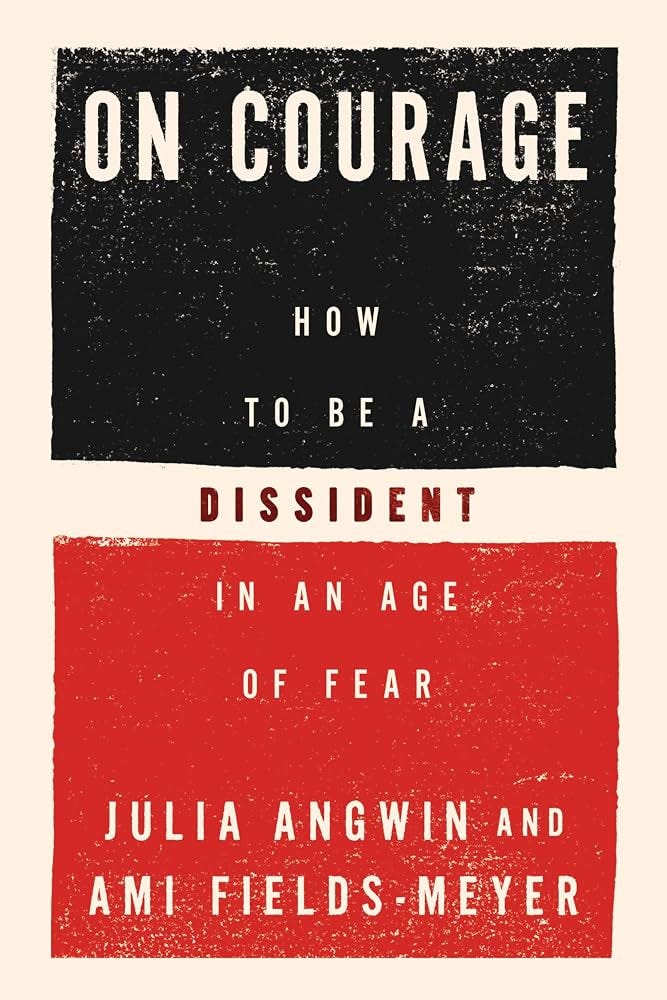
Recently, the term “dissident” was brought to my attention, in a news editorial that was discussing the current political state of our Union. The host, MS NOW anchor Rachel Maddow, was discussing a new book entitled, “On Courage: How to Be A Dissident In An Age of Fear,” with its authors, Julia Angwin and Ami Fields-Meyer. As they discussed the inhumane conditions of current ICE (a.k.a. Immigration & Customs Enforcement) incarcerations, Maddow said that she initially had a hard time understanding the connection between the human compassion being shown to the families of those who were jailed and the strategic measures of political dissidence.
The purpose of dissident movements is to resist authoritarianism, starting at a grassroots level. According to an article from The Reagan Foundation, these movements are instituted to “promote freedom in [one’s] home country.” This made me reflect on the question, “Do we need dissident movements in today’s America?” Are there fundamental freedoms in jeopardy? I think the answer is an emphatic “YESSS!” As the Public Enemy song calls for, we need to “Fight the Powers That Be!” I tried to think of a few examples of American dissident movements, and we actually have already had several dissentions in modern history.